Business 5 min read By Bethany Hadley
Meta’s $92 Billion Reality Labs Loss Meets a Market Moving to Glasses
Meta spent years building a headset-led future, but the fastest growth in extended reality is now coming from lighter smart glasses. The strategic question is whether Reality Labs can convert vast R&D into a wearable platform consumers actually keep on.
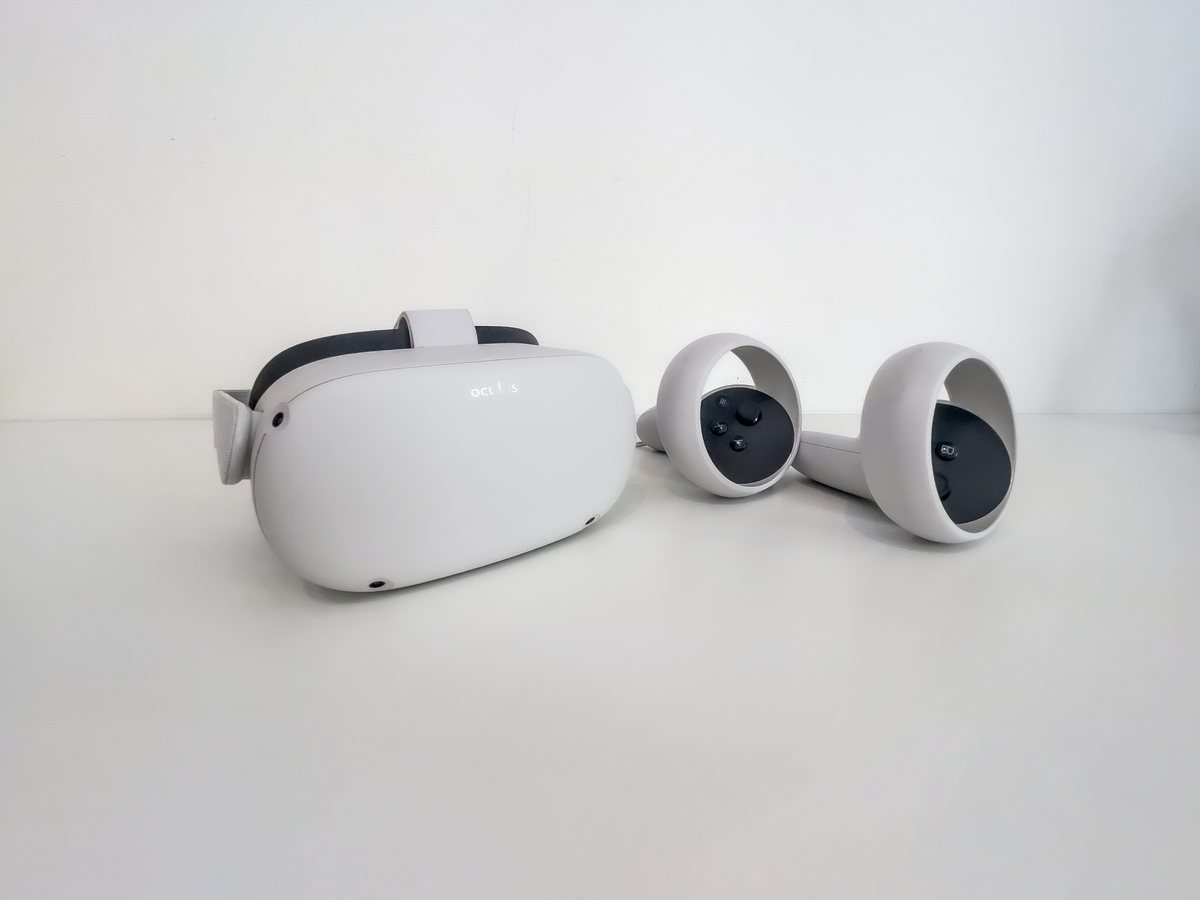
Meta's biggest hardware wager is confronting a basic market fact: consumers appear more willing to put technology on their faces when it behaves less like a headset.
Reality Labs has accumulated approximately $92.2 billion in operating losses from 2020 through the first half of 2026, based on Meta's reported segment results. In 2025 alone, it generated $2.207 billion of revenue against a $19.193 billion operating loss. The first six months of 2026 added $833 million of revenue and $8.647 billion of operating loss.
The arithmetic is dramatic, but it is often framed too crudely. Reality Labs is not a single metaverse product line. It contains VR and AR devices, software, content, wearables and longer-term foundational work. The sensible business question is therefore not whether every dollar was “lost on the metaverse,” but whether this research portfolio can produce a platform large enough to justify its extraordinary cost.
The original platform thesis was explicit. Facebook paid roughly $2 billion for Oculus in 2014 and described VR as a potential next social and communications platform. The company then renamed itself Meta in 2021, placing the metaverse at the centre of its corporate narrative. Science Official's long-form research “Why Virtual Reality Keeps Missing the Mass Market” places that bet within earlier waves from Nintendo and Google.
The current market is now offering a useful distinction. IDC reported that XR shipments grew 44.4% in 2025, an apparently bullish figure. Yet the expansion was driven primarily by smart glasses, while traditional VR and mixed-reality headsets continued to decline. Quest headset shipments fell 42.3% year on year.
That matters because market category can hide product substitution. “XR is growing” does not necessarily mean people are embracing sealed immersive computing. They may instead be embracing cameras, audio and AI in glasses that preserve ordinary vision and social contact.
IDC's 2026 forecast makes the divergence clearer: about 13.6 million display-less smart glasses versus roughly 3.2 million mixed-reality devices. The higher-volume product is the one that asks less of the wearer.
Apple has tested the other end of the strategy. Vision Pro shows what happens when a company prioritises interface quality and display engineering over affordability. The current M5 version still starts at $3,499 in the US and weighs roughly 750–800 grams, excluding a 353-gram external battery. It can support valuable professional applications, but it has not changed the basic economics of asking consumers to wear a computer for extended periods.
For Meta, the strategic opportunity may therefore sit inside the apparent retreat from the original metaverse vision. The company has spent years developing optics, tracking, spatial interfaces, low-power computing, AI and wearable hardware. Those capabilities can migrate into devices with a much larger potential usage window.
The difference is more than industrial design. A VR headset competes for scheduled sessions. Smart glasses compete for continuous presence. A device worn for minutes must monetise intensely; one worn for hours can become an interface, data source and services channel.
That shift also changes network effects. Developers hesitate to build deeply for a platform that users enter occasionally. A lightweight wearable that becomes part of daily communication, photography, navigation or AI assistance can create more frequent touchpoints and a stronger reason for third parties to participate.
Meta's huge Reality Labs losses therefore sit at an inflection point. They can remain the cost of an overbuilt platform that never achieved mass behaviour, or become the R&D base for a different category. The decisive product may not look like the metaverse hardware Zuckerberg once presented. It may look almost ordinary — precisely because ordinary is what allows a device to become infrastructure.
49