Business 4 min read By Callum Montgomery
Data centre boom delivers $700bn investment as tax gains outweigh political backlash
A $700 billion wave of data centre construction is generating substantial local tax revenue, with operators arguing that the facilities place fewer demands on public services than warehouses and that electricity and water challenges are solvable.
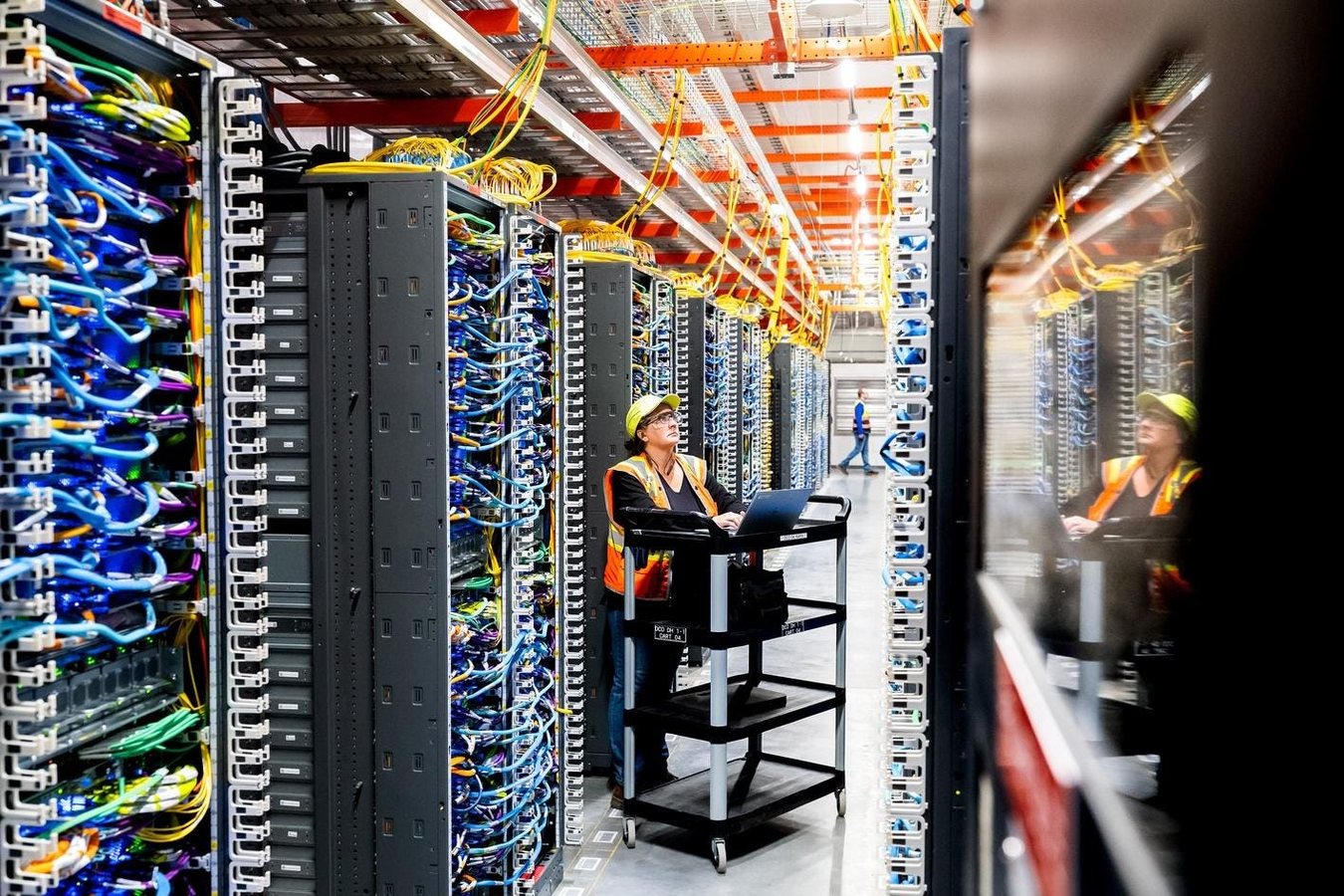
A $700 billion construction boom in data centres is reshaping local government finances across the United States, with the tax revenue generated by the facilities consistently outweighing the political backlash they provoke, according to an analysis of the sector's economic impact.
The scale of the investment has become a significant story for both business and public policy. Data centres are capital-intensive projects that generate substantial property tax receipts, and those receipts are arriving at a time when many municipal budgets remain under pressure. The result, the analysis suggests, is that opposition from residents concerned about noise, power consumption and water use has not been sufficient to slow the pipeline of new projects.
A central argument made by the industry is that data centres place fewer demands on city services than warehouses of comparable size. Warehouses generate heavy lorry traffic, require road maintenance and often need significant policing and fire protection. Data centres, by contrast, employ relatively few staff on site and generate limited vehicle movements once construction is complete. That asymmetry means the net fiscal benefit to a host community can be considerably larger than the headline tax figure alone implies.
The two most frequently cited objections to data centre development are electricity consumption and water use. Both are described in the analysis as solvable problems rather than fundamental obstacles. On electricity, operators are increasingly signing long-term power purchase agreements, funding grid upgrades and co-locating with renewable generation. On water, many new facilities are adopting closed-loop cooling systems that dramatically reduce consumption, while others are using air cooling in cooler climates or treated non-potable water where local supplies allow.
The political dimension is more complicated. Local opposition has become a familiar feature of planning hearings, with residents raising concerns about strain on power grids, noise from cooling equipment and the possibility that large users will push up electricity prices for households. Some campaigners argue that the tax benefits are overstated once infrastructure costs and abatements are taken into account. Yet the analysis indicates that the revenue gains have so far proved more politically durable than the objections, particularly in jurisdictions where data centre receipts have funded schools, roads and emergency services without a corresponding rise in council tax.
The boom also reflects a broader shift in where digital infrastructure is built. Operators have moved beyond the traditional hubs of northern Virginia, Silicon Valley and Dublin into secondary markets across the American south and midwest, drawn by cheaper land, available power and receptive local governments. That dispersal has spread the tax benefits more widely, giving more communities a direct stake in the sector's expansion.
For investors, the $700 billion figure underscores how much capital is being committed to computing capacity, much of it tied to demand for artificial intelligence, cloud services and data storage. For policymakers, the challenge is to capture the fiscal upside while managing grid capacity, water resources and community consent. The evidence so far suggests that where those issues are handled credibly, the tax gains continue to beat the backlash.