Business 5 min read By Arthur Ellington
Boeing flags 737 MAX software glitch affecting landing navigation
Boeing has identified a software fault in its 737 MAX aircraft that affects a landing navigation feature, adding to the planemaker's ongoing technical and regulatory challenges.
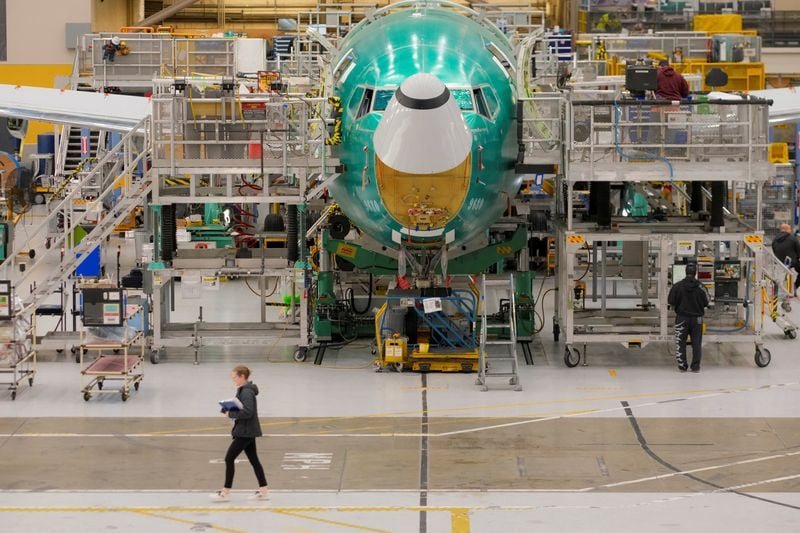
Boeing has disclosed a software glitch affecting the 737 MAX that impacts a system used for landing navigation, according to a report by The Wall Street Journal. The fault relates to the aircraft's landing navigation feature, a critical component that assists pilots during approach and touchdown. The discovery adds to the planemaker's list of technical issues as it works to restore confidence in its most commercially important jet.
The 737 MAX has been under intense scrutiny since two fatal crashes in 2018 and 2019 led to a worldwide grounding of the fleet. Those accidents were linked to the aircraft's Maneuvering Characteristics Augmentation System, a flight control law that pushed the nose down based on erroneous sensor data. Boeing subsequently redesigned MCAS and agreed to stricter regulatory oversight. The latest software issue, while different in nature, raises fresh questions about the robustness of the jet's systems and the company's internal quality controls.
According to the report, the glitch affects a landing navigation function, though the exact operational impact and the number of aircraft involved have not been fully detailed. Boeing has reportedly flagged the issue to regulators and is working on a fix. The Federal Aviation Administration, which certifies aircraft and software changes in the United States, has not publicly outlined any immediate action. The agency has previously said it will take whatever time is needed to review Boeing's submissions.
For airlines operating the 737 MAX, any software fault that touches landing systems is significant. Carriers rely on precise navigation aids for instrument approaches, particularly in poor weather or at airports with complex procedures. A fault that degrades that capability could lead to operational restrictions, additional pilot training, or temporary limitations on certain routes. Boeing's customers include major carriers in the United States, Europe, Asia, and the Middle East, many of which have large 737 MAX order books.
The disclosure comes as Boeing attempts to stabilise its commercial aviation business after years of disruption. The company has faced production slowdowns, delivery delays, and heightened regulatory inspections. Its financial performance has been pressured by compensation payments to airlines, increased manufacturing costs, and the need to invest in safety improvements. The 737 MAX remains central to Boeing's recovery, accounting for a substantial share of its narrowbody backlog and future revenue.
Investors have reacted cautiously to successive technical bulletins from Boeing. Each new issue prolongs the certification and delivery timeline for aircraft variants and can trigger additional scrutiny from the FAA and international regulators. The European Union Aviation Safety Agency and other bodies have previously conducted their own reviews of the 737 MAX, sometimes independently of the FAA. Any new software fix may require parallel approval in multiple jurisdictions, adding to the timeline.
Boeing has not commented publicly beyond confirming that it is addressing the matter. The company's engineering teams are reportedly assessing the scope of the problem and developing a software update. It remains unclear whether the glitch has contributed to any incidents in service. Boeing has emphasised that safety remains its top priority and that it is cooperating fully with regulators.
The 737 MAX programme has been a focal point for broader debates about aviation safety culture, regulatory capture, and the pace of technological change in commercial aircraft. Lawmakers in the United States and Europe have called for stronger oversight of delegated certification powers, where manufacturers can self-certify certain design elements. The latest glitch is likely to reinforce those calls, even if the fault itself proves to be minor.
For now, airlines and passengers will look for clarity on whether the issue requires immediate action or can be resolved through a routine software patch. Boeing's ability to communicate transparently and fix the problem quickly will be closely watched by regulators, customers, and investors alike. The company's next steps will shape confidence in the 737 MAX as it continues to compete with Airbus in the narrowbody market.
5