
Business 6 min read By Callum Montgomery
Accell’s failed sale turns a leveraged buyout into a European breakup
Four years after a KKR-led buyout, Accell has moved from creditor ownership to insolvency protection. Germany, France and Britain now represent separate value-recovery problems built around Winora, Ghost, Lapierre and Raleigh.
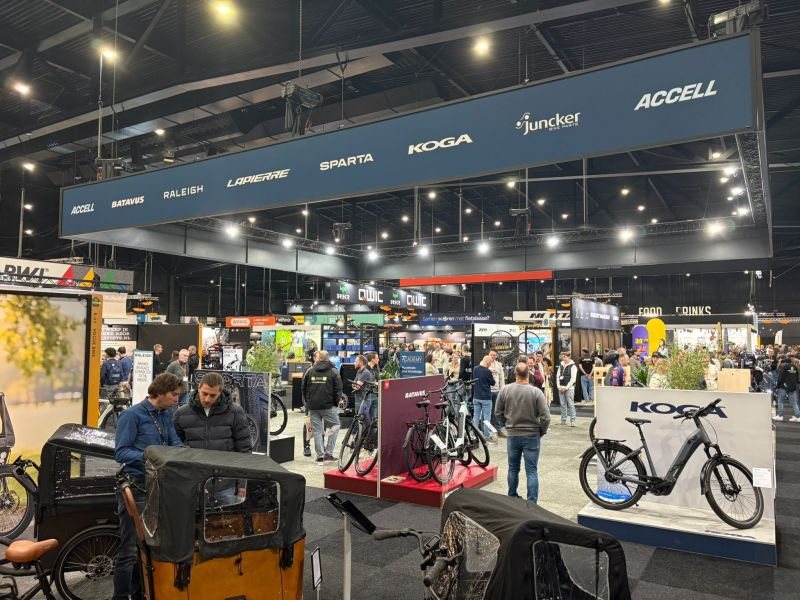
Accell Group’s insolvency is best understood as the final stage of a capital-structure failure rather than a simple collapse in bicycle demand. The company still owns recognizable brands, maintains operating businesses and, only months ago, was presenting a renewed product portfolio. What it could no longer maintain was the financing and ownership structure that held those assets together.
The Dutch entities received a provisional suspension of payments on August 5. In the Netherlands, the procedure provides court-supervised breathing room to a company facing payment difficulties. Accell’s own statement acknowledged that an exhaustive review had failed to find a realistic path to continue the group in its existing form.
That conclusion comes four years after a consortium led by KKR took Accell private. The Financial Times values the 2022 transaction at €1.8 billion. The timing mattered: pandemic demand had turned bicycles and e-bikes into growth assets, encouraging manufacturers and investors to assume that elevated sales could persist.
Instead, the industry moved from shortage to surplus. Supply-chain disruptions encouraged companies to order components aggressively. When consumer demand normalised, inventory remained. Discounting helped clear stock but compressed margins and cash generation. A cyclical slowdown became a balance-sheet crisis because Accell was carrying substantial debt.
The group then entered a sequence of restructurings. A 2025 recapitalisation reduced debt in the operating group to about €800 million, according to Accell. In February 2026 the company announced more funding and another substantial debt reduction. Lenders took control, while KKR and its partners lost the equity capital they had invested.
That transition is crucial for any analysis of the present crisis. KKR is part of the causal history, but it is no longer accurate to describe the private-equity firm as Accell’s current controlling owner. By the time of insolvency, lenders had become the economic owners and were seeking a strategic exit.
Dutech Group was the prospective solution. Its Tri Star E-Moving entity pursued Accell and filed for competition approvals. Germany cleared the proposed combination, and a Polish filing also progressed. Yet regulatory clearance only establishes that a deal may proceed; it does not settle price, financing or risk allocation. Negotiations ultimately failed in early August.
The absence of a group buyer has forced value recovery into national compartments. In Germany, Accell Germany, Winora Staiger, Ghost Bikes and Engelbert Wiener Bike-Parts entered self-administered insolvency proceedings. The businesses employ roughly 370 people and generated about €340 million of revenue in 2025. They are continuing to trade while management seeks a buyer and tries to separate them from the Dutch parent.
That German package has characteristics a distressed investor could value: historic brands, distribution infrastructure, technical teams and an established dealer base. Winora dates back to 1914 in Schweinfurt. Haibike is associated with Sennfeld, while Ghost is rooted in Waldsassen. The assets may make more strategic sense outside a debt-heavy pan-European holding structure.
France is producing a similar carve-out around Lapierre. Cycles Lapierre filed for judicial restructuring in Dijon after the parent’s distress disrupted short-term financing. Revenue was €99.1 million in 2025. Operating losses narrowed materially, and management had already cut inventory and headcount. CEO William Perrier says the objective is to regain independence.
The British asset is Raleigh, founded in Nottingham in 1887 and acquired by Accell in 2012. British manufacturing ended in 2002, so a buyer would be acquiring a brand, product platform, distribution relationships and consumer recognition rather than a traditional UK factory footprint. That makes Raleigh different from the German case but potentially easier to separate.
Market conditions remain an obstacle. French bicycle sales fell 6% by volume in 2025, and market value declined 4.8%. Repair spending rose strongly, evidence that cycling participation can remain resilient even as new-bike demand weakens. For manufacturers, however, that shift delays inventory turnover and cash conversion.
Accell’s April messaging shows the split between operating narrative and financial reality. The company said it had completed a transformation and planned new 2027 models across its major brands. The product organisation may indeed have improved. But a turnaround that needs multiple seasons cannot outwait a liquidity problem that is measured in weeks.
The likely end state is therefore a series of distressed M&A transactions. Germany may be sold as an operating cluster, Lapierre may secure an independent investor, and Raleigh could attract a separate strategic buyer. Creditors will try to maximise recoveries by keeping those businesses intact long enough to sell them. Accell’s leveraged buyout will end not with one successor owner, but with a European corporate map redrawn brand by brand.
48