Technology 3 min read By Arthur Ellington
China’s first AI-generated cinema release Sanxingdui flops at the box office
Sanxingdui: Future Past, China’s first AI-generated feature film to get a theatrical release, has earned only about $180,000 at the Chinese box office against a budget of $1.5 million.
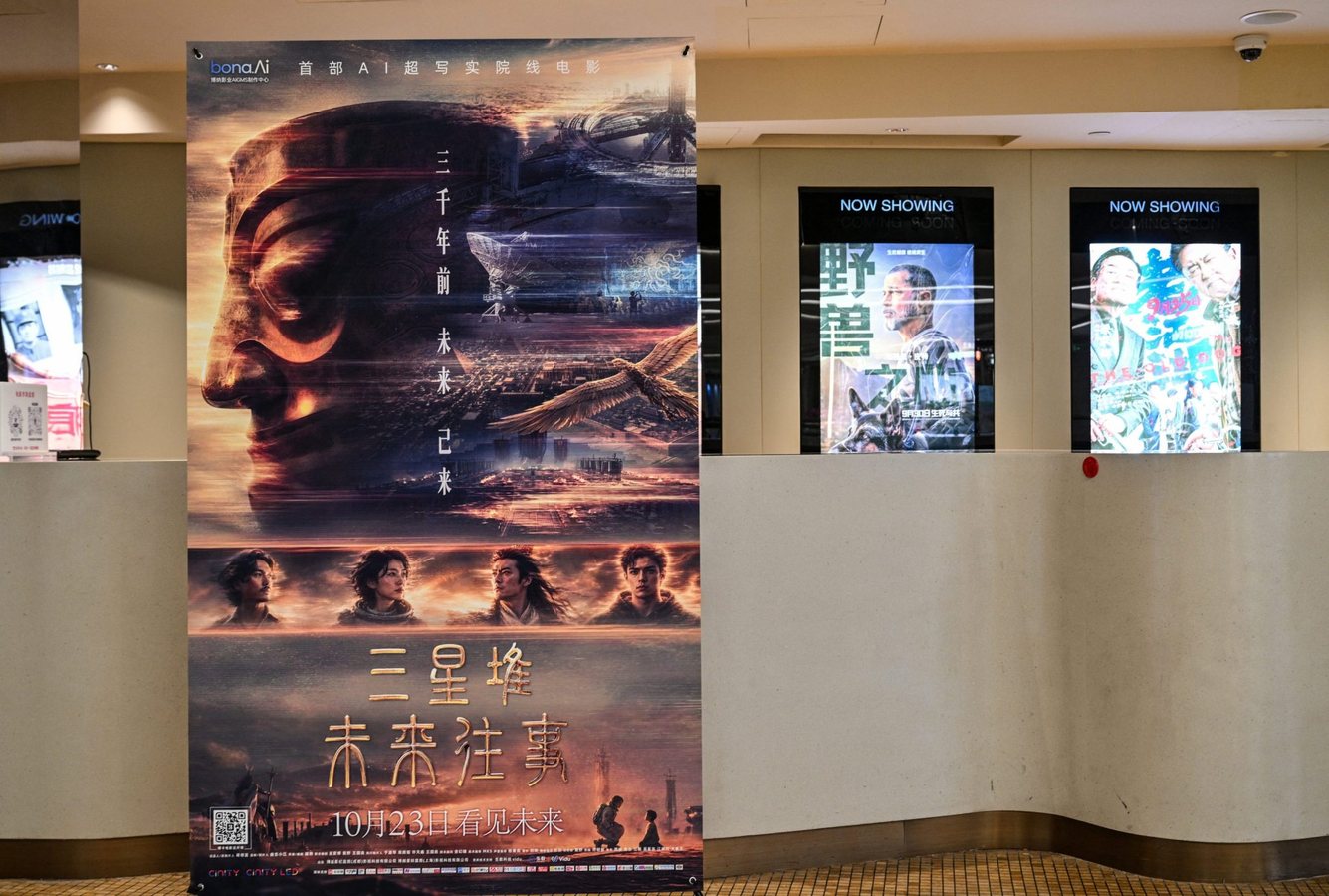
China’s first AI-generated feature film to receive a theatrical release has struggled badly at the country’s box office. The sci-fi thriller Sanxingdui: Future Past had earned an estimated $180,000 through Monday, according to the ticketing platform Maoyan, against a reported budget of $1.5 million. The film, produced by Bona Film Group, follows an archaeologist who must save a future world enslaved by artificial intelligence, according to Chinese state media.
Jiang Defu, the company’s chief operating officer, acknowledged the film’s lukewarm reception in an interview with the Chinese film outlet Yuli. He nonetheless presented the project as an important experiment. “We are the first to try it, the first to get a theatrical release permit, and the first to be tested by the audience,” he said. “I think that is not easy at all.” Fortune has contacted Bona Film Group for comment.
Reactions on social media have been divided. One user on Xiaohongshu, a Chinese platform similar to Instagram, wrote that “China’s first AI movie totally traumatized me”. Another was more positive, saying that AI films are very low-cost and allow storytellers “complete freedom”.
The result contrasts with the rapid rise of AI in shorter content. According to the financial publication Caixin, more than 95 per cent of the over 120,000 Chinese microdramas released in the first quarter of 2026 were AI-generated, compared with nearly none a year earlier. The cost of producing these short dramas has fallen to as little as $3,000. The poor performance of Sanxingdui suggests that audiences are far less willing to accept AI in full-length features.
Stanley Rosen, a professor at the University of Southern California who specialises in Chinese film and society, said the public was highly sceptical of AI in major feature films, even though it generally accepts short-form work. The debate is also live in Hollywood, where screenwriters and actors went on strike in 2023, in part to demand protections against the use of AI. Netflix released the crime thriller Animals on 9 October, and its director Ben Affleck said at a Bloomberg event that he had used AI for many things in the film, while being hesitant to specify them because movies are meant to foster “the illusion of reality”.
Rosen said he was not convinced audiences would watch an AI-generated film in cinemas unless it matched the quality of blockbusters such as Avatar or Nezha 2. Such works may find a better home on streaming platforms such as Netflix and Amazon Prime Video. “The financial loss of Sanxingdui: Future Past will compel others contemplating using AI for feature films to tread more carefully,” he said.
6