Technology 5 min read By Arthur Ellington
Booking Holdings CFO Says AI Hyperscalers Are Guessing at Returns
Ewout Steenbergen told a New York summit that even the biggest AI spenders cannot calculate their return on investment, while Booking focuses on internal efficiency and modest customer gains.
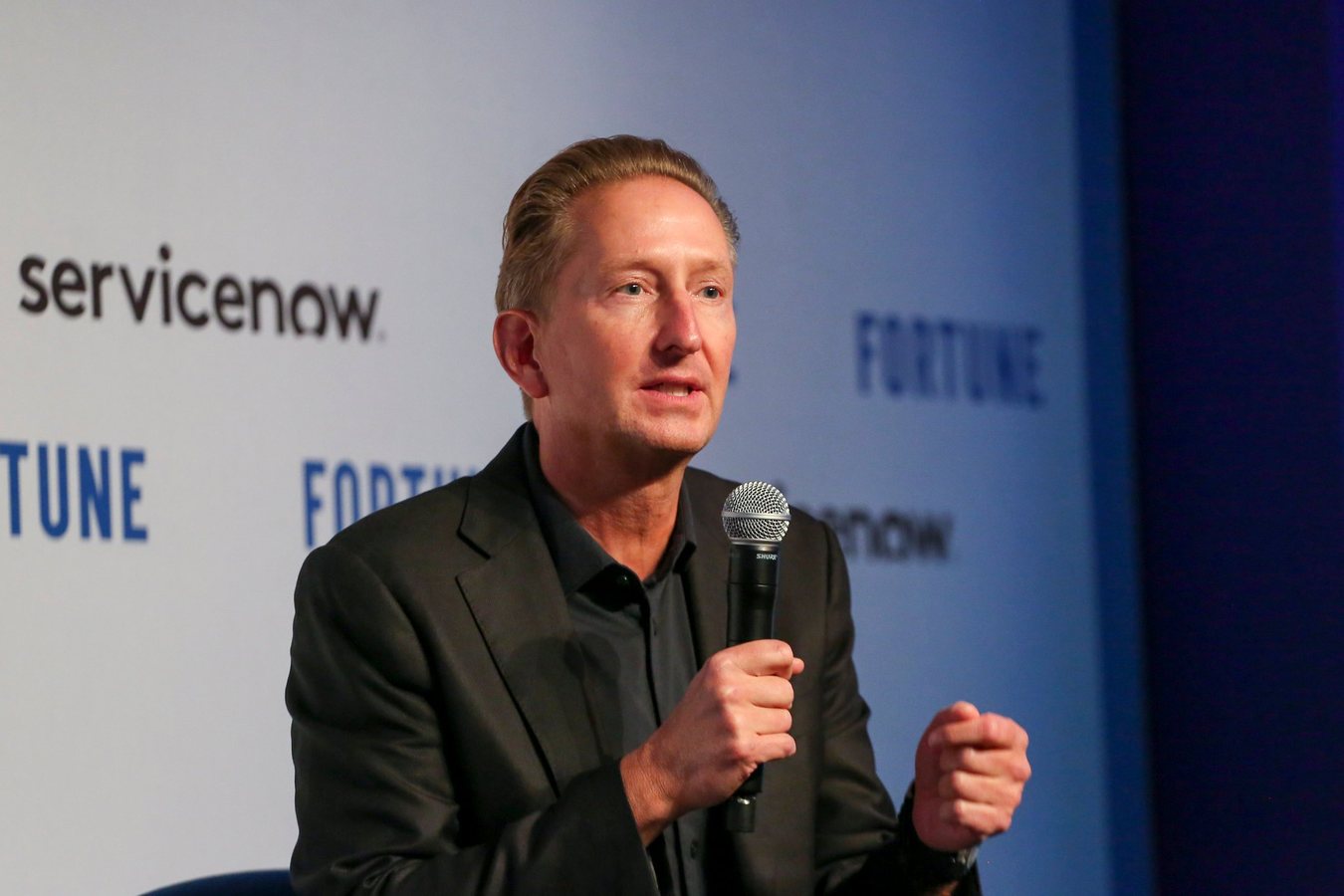
Booking Holdings' chief financial officer has questioned whether the companies spending the most on artificial intelligence can measure what they are getting back. Ewout Steenbergen said even the hyperscalers committing hundreds of billions to large language models do not really know what their return on investment will be.
Speaking at a summit in New York, Steenbergen said those technology giants are working from assumptions and hypotheses rather than proven outcomes. The driving motive, he suggested, is not certainty but fear of falling behind. That, he argued, is good news for companies that use AI models rather than build them, because adoption costs far less than development — provided the bill is watched closely.
He said returns will materialise for processes redesigned end to end, but warned that costs must not spiral. Booking, which owns, Agoda, Priceline and OpenTable, is telling investors that AI will make travel easier for customers and its marketing cheaper. The customer-facing numbers remain small. Steenbergen said referrals from large language models, paid and unpaid, accounted for under 1% of total room nights in the second quarter.
The clearer gains are internal. After two years of experimentation, Booking is rebuilding processes from scratch. Customer service went first. Bookings are up at a high-single-digit rate while customer service costs are slightly down, meaning the cost per booking has fallen substantially. Customer satisfaction rose at the same time.
In engineering, Booking's roughly 9,000 engineers are getting about 30% more code into production, counting only merge requests that pass testing and quality control. To keep AI spending in check, the company uses what Steenbergen called effective model cost routing. Basic and open-source models handle simple tasks, while more expensive models take on complex ones. Engineering groups are measured on total IT cost per merge request, combining human and AI-token costs. Token spending can rise, he said, as long as the cost of each merge request reaching production comes down.
Steenbergen was clear that AI will not change how people travel, only how they plan and book. The hotel remains the hotel, the airline the airline and the rental car the rental car, he said. Travellers visit about five platforms on average before booking. AI could cut that research and then manage disruptions, such as a delayed flight that breaks a restaurant reservation. Booking calls this its connected trip.
About one-third of Booking's customers arrive through paid channels such as search, social media and metasearch sites, and the company spends $8bn to $9bn a year on them. It runs constant A/B tests and large optimisation models to decide where that money goes. The other two-thirds come directly, and Booking is building AI tools into its own apps to keep them. Customers who use those tools take slightly less time to book, convert at marginally higher rates and cancel slightly less often. Steenbergen cautioned that it is very early stage, so there is not a lot of data.
He said the bigger opportunity is growth rather than cost. Answering an audience question about trip bundles, he said Booking is more transactional today and AI could make it a much higher-frequency business. His example: a traveller has a trip to Paris and the forecast for Wednesday is bad. The company could proactively suggest rearranging the schedule, moving a walking tour to Thursday and visiting the Louvre on Wednesday. If a customer who likes active sports has an empty day, it could offer to book kite surfing. That, he said, would build more loyalty, more trust and more brand value.
Booking points to early signs in its second-quarter numbers. Connected Trip transactions, where travellers book more than one travel vertical for the same trip, grew at a low-double-digit rate at. Merchant bookings reached about 73% of gross bookings. Level 2 and Level 3 Genius members made up more than 30% of active customers.
Steenbergen is learning too. He said he has an AI coach and talks about it inside the company on purpose. He also has two agents working for him. One, which he calls a strategic thought partner, helps with board presentations and strategic plans. The other, a critical equity research agent, helps him prepare for earnings calls. He said no one knows about them, adding that if he has to learn and has a coach, it is very normal. Everyone has to learn, he said.
11