Sports 3 min read By Bethany Hadley
Mauricio Pochettino leaves the US men's national team coaching post
Mauricio Pochettino's exit as coach of the US men's national team is seen as potentially beneficial for American soccer, despite results that were not decisive.
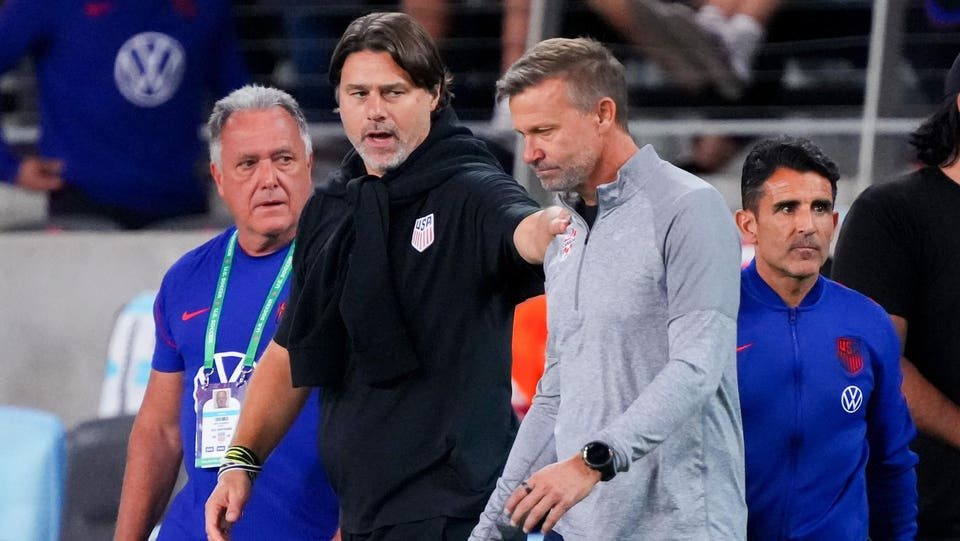
Mauricio Pochettino is leaving his post as coach of the United States men's national soccer team, and according to a column published by Forbes by Ian Quillen in November 2026, this departure could ultimately benefit American soccer. The columnist considers that the end of this period may open a new chapter for the team, at a time when the Argentine's record does not stand out as a decisive argument.
Pochettino's sporting record at the helm of the team was not decisive, according to the analysis. The results obtained were not enough to establish a lasting momentum, and this observation serves as the starting point for Ian Quillen's reflection. The enthusiasm shown by the players and the public during the World Cup, on the other hand, exceeded the concrete scope of the results, which leaves a mixed impression of the campaign. For the columnist, this gap between collective emotion and performances on the field sums up well the limits of the past period.
Ian Quillen also recalls that coaches who begin a second cycle at the head of a national team often encounter difficulties. This observation, in his view, strengthens the case for a change at this stage rather than a renewal. The text presents this tendency as a constant of the profession, without supporting it with detailed statistics in the available material. The reasoning therefore rests more on observed experience than on a numerical demonstration.
Pochettino's departure comes at a time when the American federation must now choose the direction of its national team. The column suggests that this transition offers an opportunity to rethink the sporting project, without however detailing the criteria that would guide this choice. No name is put forward as his successor in the available material.
The precise reasons for the departure are not detailed either. The column, the sole source on which this analysis rests, does not shed light on the exact motives for the decision, nor on the conditions under which it was made. It is therefore not possible, based on these elements alone, to say whether the departure was decided by Pochettino, by the federation, or as part of an agreement between the two parties.
For observers of American soccer, the central question remains that of continuity. Ian Quillen's text defends the idea that a renewal at the head of the team may be more productive than extending a cycle judged to be inconclusive. This position, which remains that of an opinion columnist, opens the debate on how the national team should approach the coming challenges after a World Cup marked by more emotion than results.
Source: forbes.com

4