Politics 4 min read By Arthur Ellington
Trump Tells UN Iran Faces Choice Between Deal and Destruction
US president uses General Assembly address to warn Tehran it can negotiate or face annihilation, as UN chief urges leaders to end global conflicts.
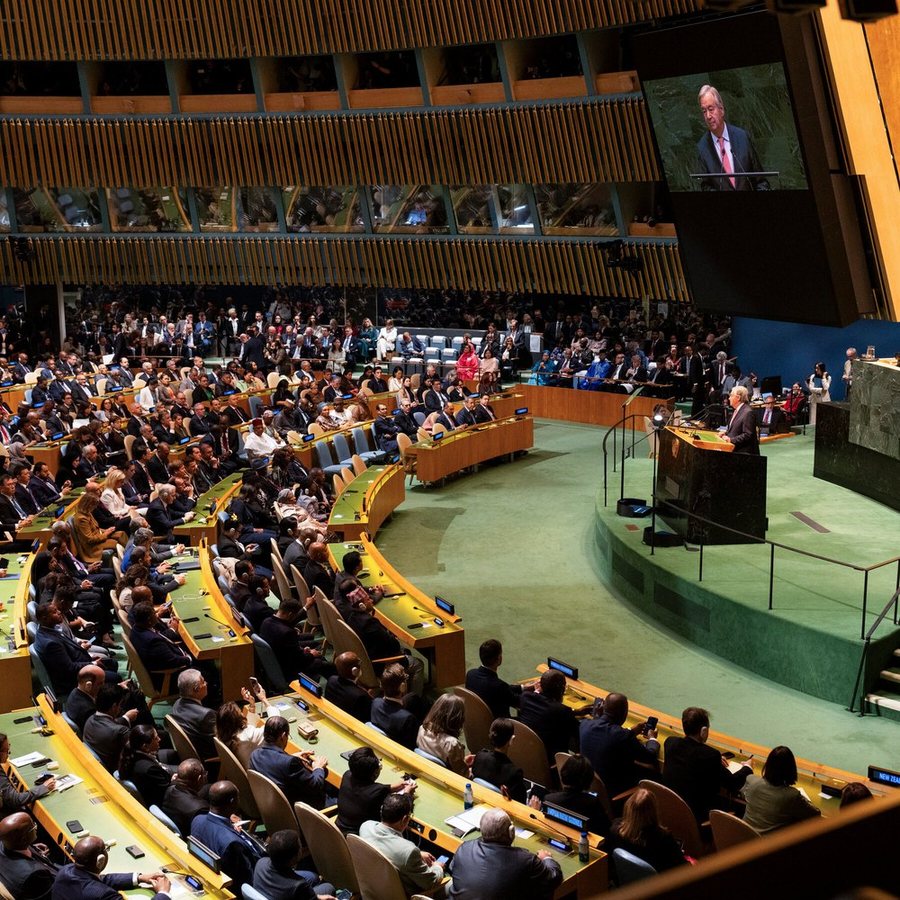
Donald Trump has told the United Nations General Assembly that Iran faces a stark choice between reaching a deal with Washington or being «annihilated», in a speech that placed the Islamic Republic at the centre of his address to world leaders in New York.
The US president said Iran had been «the bully of the Middle East, but they are the bully no longer», according to accounts of the speech. His remarks amounted to a public ultimatum, framing the decision as one that Tehran must now make rather than one controlled by the United States.
The address came during the annual high-level debate at the General Assembly, where heads of state and government gather to set out their priorities. Trump's language marked a sharp escalation in rhetoric directed at Iran, and it quickly became the dominant theme of the day's proceedings.
Earlier in the session, António Guterres, the UN secretary general, used his own address to call on the assembled leaders to end conflicts around the world. His appeal for de-escalation stood in contrast to the confrontational tone adopted by the US president later in the day.
The timing of Trump's remarks places renewed attention on the state of US-Iran relations and on the wider security picture in the Middle East. Washington has long accused Tehran of destabilising the region through its support for armed groups and its nuclear programme, charges Iran has consistently rejected.
By presenting the choice as one between a negotiated settlement and military destruction, the president signalled that his administration is prepared to pursue either path. The formulation leaves the initiative with Iran, while making clear that the consequences of refusing talks would be severe.
Trump's appearance at the UN also touched on other themes, including a suggestion that artificial intelligence should be rebranded as «super intelligence». That remark added a technology dimension to a speech otherwise dominated by security and diplomacy.
The General Assembly debate continues over the coming days, with leaders from across the world expected to respond to the US position. Iran's own delegation and its allies are likely to reject the characterisation of the country as a bully and to push back against the threat of annihilation.
For Britain and its European partners, the speech raises familiar questions about how to handle Tehran. European governments have sought to keep diplomatic channels open while maintaining pressure over Iran's nuclear activities, and a US ultimatum complicates that balancing act.
The UN setting gives the remarks added weight, because they were delivered before an audience of nearly every government in the world. Trump's words will now be studied in capitals for signs of whether Washington intends to move from rhetoric to action.
What happens next depends largely on Iran's response. A decision to enter talks would open a new phase in the long-running dispute; a refusal would leave the president's warning hanging over the region, with the risk that the choice he described becomes a reality.
5