Politics 3 min read By Alice Ashford
China courts Egypt as Xi seeks Middle East influence
Chinese President Xi Jinping's visit to Egypt signals Beijing's push to expand influence in the Middle East, positioning China as a stabiliser while the United States remains militarily entangled in the region.
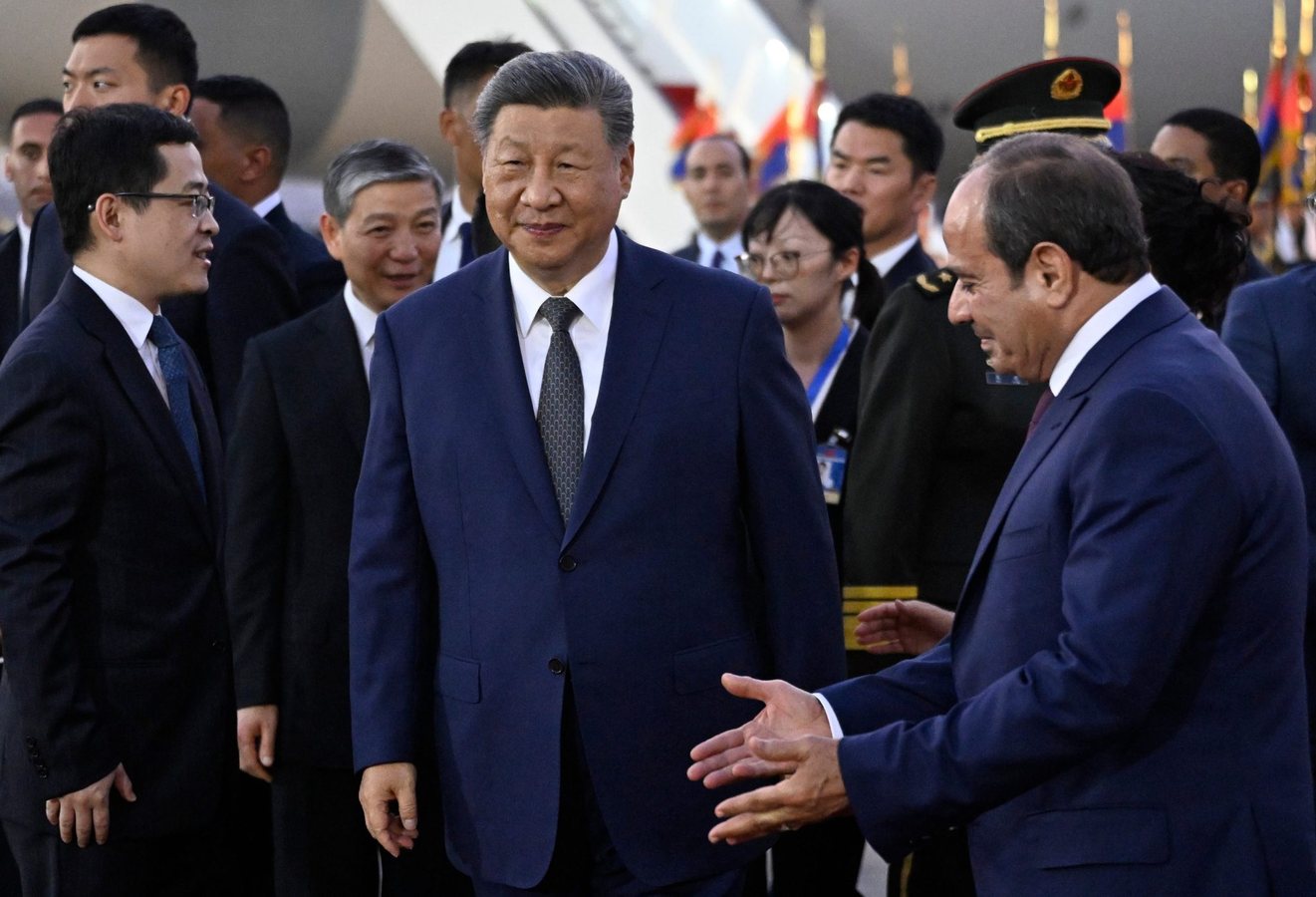
Chinese President Xi Jinping has arrived in Egypt on his first visit there in a decade, part of a broader push by Beijing to deepen ties with a key United States ally in the Middle East. The trip, which began with a red-carpet ceremony at Cairo airport attended by President Abdel Fattah el-Sissi, is intended to present China as a stabilising force in a region where Washington has long been militarily engaged.
During talks on Wednesday, Xi called for Cairo and Beijing to jointly oppose what he described as unilateralism and acts of bullying, according to China's state-run Xinhua news agency. He also urged the two countries to work towards a more just and equitable global governance system. The leaders marked 70 years of diplomatic relations by publishing opinion pieces in Egypt's state-run newspapers, with Xi writing that both sides should expand pragmatic collaboration through development.
Egypt views its growing relationship with China as a way to diversify its strategic partnerships. In 2023, Egypt was invited to join the BRICS bloc of major emerging economies, and a year later signed agreements with China on the Belt and Road Initiative, Beijing's signature infrastructure programme. China has invested more than $10 billion in Egypt, building a business hub east of Cairo and an electric rail line in the Nile Delta. Annual trade between the two countries is estimated at $20 billion, compared with $15.7 billion in trade between the United States and Egypt in 2025.
The visit comes as China seeks to position itself as a mediator in the region. In 2023, Beijing brokered a deal to reestablish diplomatic ties between Iran and Saudi Arabia, showcasing its ambition to compete with Washington for influence. China has also long advocated a two-state solution to the Israeli-Palestinian conflict and hosted Palestinian President Mahmoud Abbas shortly before the Gaza war began, announcing a strategic partnership with the Palestinian Authority.
Analysts note that Egypt's control of the Suez Canal has become more strategically significant as oil shipments through the Strait of Hormuz face disruption from the Iran war. Muhammad Zulfikar Rakhmat, a Middle East expert at Jakarta's Center of Economic and Law Studies, said China has good reason to strengthen ties with the country that controls a route still open for energy supplies. He added that Xi views Egypt as a base to reach the wider Arab and African world at a time when the United States has less attention to spare there.
Xi's visit follows a two-day conference of the Shanghai Cooperation Organisation in Kyrgyzstan, attended by leaders from Russia, India, Pakistan and Iran. It also comes after the Trump administration imposed sanctions aimed at isolating Iran from its economic partners, including China, which buys more than 80 per cent of Iranian oil shipments. Beijing maintains that its trade with Iran has always abided by international law.
62