Economy 5 min read By Arthur Ellington
US workers' share of economic output falls to record low as Amazon staff on food stamps triple
American workers now receive the smallest share of economic output since records began in 1947, while corporate profits and federal assistance claims have surged. A GAO report shows Amazon workers relying on SNAP and Medicaid nearly tripled between 2020 and 2025, even as the company posted record revenues.
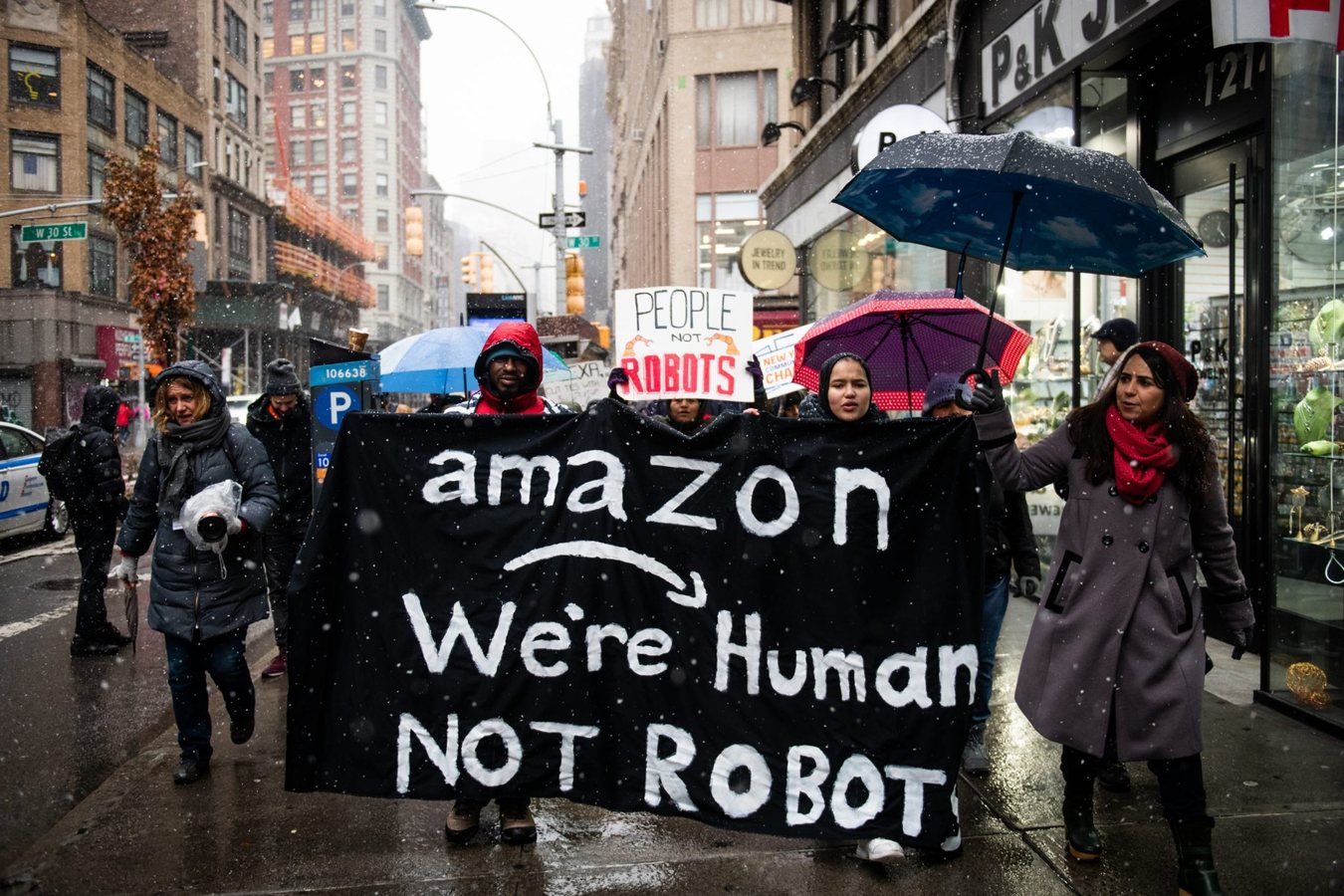
American workers are taking home the smallest share of the nation's economic output since the Bureau of Labor Statistics began tracking the metric in 1947, according to new figures that lay bare a decades-long shift in the relationship between corporate profits and wages. The labour share of income has fallen to 52.8 per cent, meaning that for every pound of economic value created, workers receive just over half, while the remainder flows to shareholders and business owners.
The consequences of that shift are becoming increasingly visible in the public finances. A Government Accountability Office report found that across 11 states sampled, Amazon — the United States' largest company by revenue — had 12,346 workers receiving benefits under the Supplemental Nutrition Assistance Program, known as SNAP, and 11,338 relying on Medicaid. That represents nearly triple the number of Amazon employees needing federal assistance compared with 2020, when the GAO conducted a similar review.
During the same period, Amazon's annual profits rose from $11.6 billion to $77.7 billion. Its 2025 revenue climbed 12 per cent year on year, from $638 billion to a record $717 billion. The GAO's findings suggest that a growing number of people in work, many of them full time, still earn too little to meet basic needs. The income threshold for SNAP eligibility is around 130 per cent of the poverty line.
Kathryn Larin, director for education, workforce and income security issues at the GAO, said the data showed that Americans using social safety net programmes are overwhelmingly in work. «What this analysis really points to is the large number of people who have very low incomes and continue to have very low income,» she said. «These are families that are really barely able to make ends meet, and yet they are working, and they are working a lot.»
Amazon disputed the conclusion drawn from the report. A spokesperson, Rachael Lighty, said it was misleading to look at raw numbers rather than percentages, arguing that Amazon pay is among the best in its industry and that regular full-time employees have access to health care from their first day at a cost of $5 per week with $5 copays for employee-only coverage. She said 74 per cent of regular full-time employees are enrolled in an Amazon health insurance plan, above the 65 per cent private-sector take-up rate for full-time workers, and challenged other large retailers to match those benefits.
Walmart and FedEx recorded similar increases in the number of workers claiming federal assistance, as did rideshare and delivery companies, indicating that the trend extends well beyond a single employer. The wider picture is one of corporate profits rising far faster than wages. The S&P 500 index has gained 600 per cent since the start of the century, while wages have risen just 12.5 per cent over the same period after adjusting for inflation.
Diane Swonk, chief economist and managing director at KPMG, has warned of the hidden consequences of a shrinking labour share, noting that despite economic indicators suggesting stability, most Americans face a persistent affordability crisis. KPMG found that since 1982, corporate profits as a share of US GDP rose from 8 per cent to 15.85 per cent, while employee compensation as a share of GDP fell from 66.6 per cent to 61.9 per cent. Swonk described the trend as fuelling social and economic instability.
Anna Stansbury, an assistant professor of work and organisation studies at the MIT Sloan School of Management, attributes the decline to roughly 50 years of change. Union representation has fallen from 20.1 per cent of US workers in 1983 to 10.0 per cent in 2025, reducing workers' bargaining power over pay and benefits. More significantly, she points to the fissuring of the workplace — the breakdown of the direct employer-employee relationship, as companies increasingly hire subcontractors and gig workers for roles once done in-house, avoiding the cost of benefits and liability.
Brent Neiman, a professor of economics at the University of Chicago, has argued that artificial intelligence is now the key driver of diminishing labour shares, warning that the technology's productivity promises pose the greatest threat to wages.