Economy 3 min read By Arthur Ellington
Romania's trade deficit widens 3.6% to €25.5 billion in first nine months
Romania's trade deficit reached 25.537 billion euro in the first nine months of 2026, up 3.6% on the same period of 2025, according to national statistics institute data.
Romania's trade deficit widened to 25.537 billion euro in the first nine months of 2026, an increase of 883.7 million euro, or 3.6%, compared with the same period of 2025, according to data published by the national statistics institute (INS). The figures show that imports continued to outpace exports, keeping the country's external trade gap on an upward path over the period.
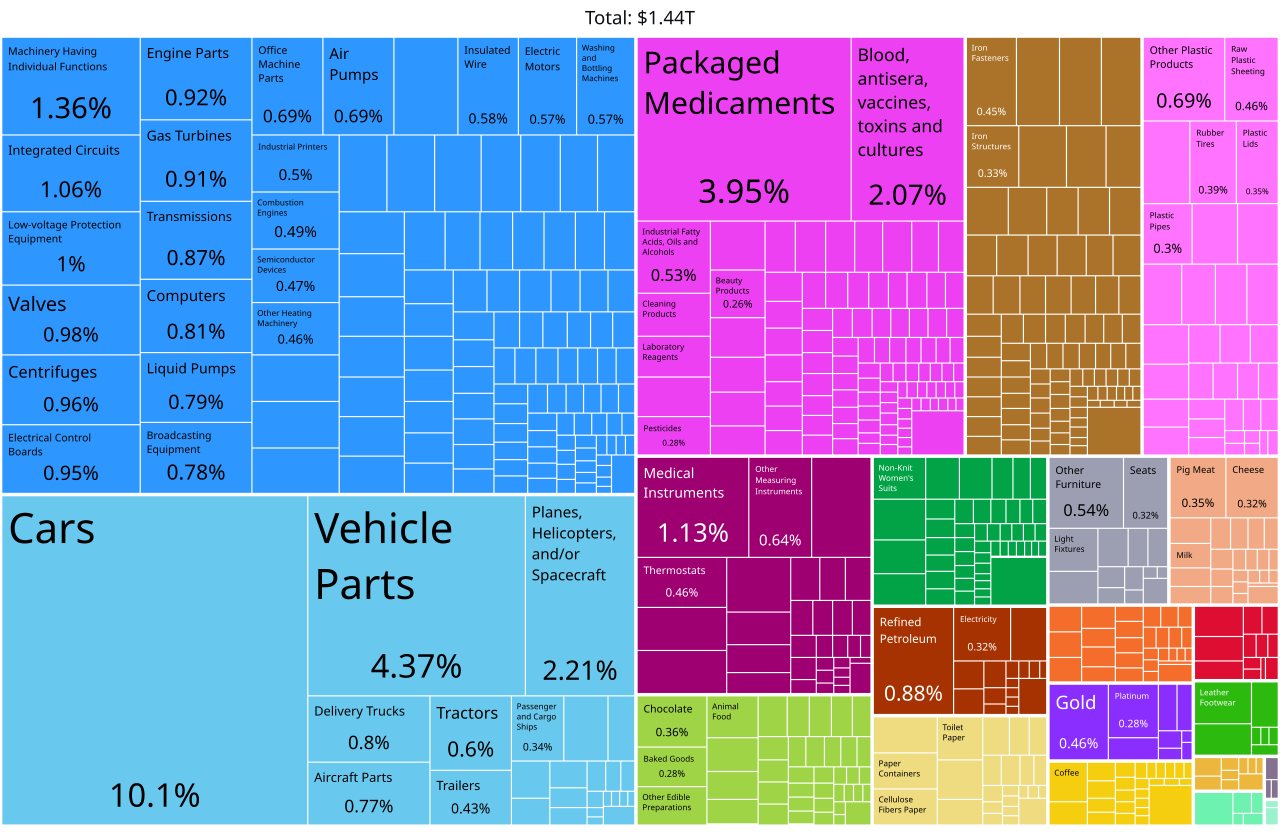
The composition of trade points to the structure of the Romanian economy. Machinery and transport equipment accounted for 45.4% of exports and 36.9% of imports, underlining the weight of industrial manufacturing in both directions. Other manufactured goods represented 26.6% of exports and 27.0% of imports, placing finished and semi-finished industrial products at the centre of the country's foreign trade. Taken together, these two categories show how closely Romania's trade balance is tied to manufacturing, with machinery and transport equipment being the single largest driver on both sides of the ledger.
The European Union remains by far Romania's most important trading partner. Trade with other EU member states totalled 53.958 billion euro in exports and 73.066 billion euro in imports, meaning intra-EU trade made up 71.7% of exports and 72.5% of imports. Trade with countries outside the bloc amounted to 21.313 billion euro in exports and 27.742 billion euro in imports, representing 28.3% of exports and 27.5% of imports. The near-identical shares on each side indicate that the reliance on the single market is a stable feature of Romania's trade profile rather than a shift in direction over the nine months.
The deficit is calculated on a FOB/CIF basis, the standard convention in which exports are valued at the border of the exporting country and imports include the cost of insurance and freight up to the importing country's border. This methodology means the reported import figures carry transport and insurance costs, which affects how the gap compares with other measures of trade balance. Another news outlet has reported the same deficit figure and the same percentage increase, corroborating the INS data.
Because the gap is measured against the same nine-month period a year earlier, the 3.6% rise reflects the change in the balance between imports and exports over that interval rather than a monthly trend. The absolute size of the deficit, at more than 25 billion euro, is the figure that stands out for a country of Romania's economic scale, and the year-on-year increase shows the gap has not narrowed despite the continued expansion of exports in key industrial sectors. The data offers a snapshot of the external position of an economy that remains heavily integrated with the European single market, where the bulk of Romanian goods are sold and most inputs are sourced.
Source: economedia.ro
11