
Economy 4 min read By Callum Montgomery
Finland Uses €28.5 Million of Development Funding to De-Risk Ukrainian Power Investment
The €46.5 million technology project leaves Ukraine funding roughly €18 million, showing how reconstruction is being financed through shared risk rather than full donor payment.
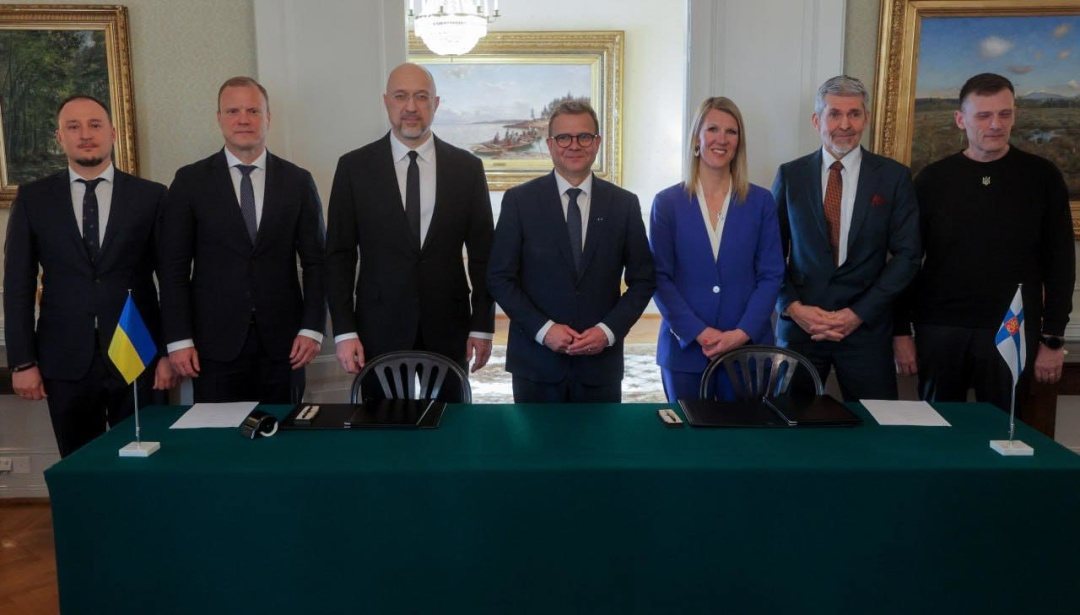
Finland is committing about €28.5 million of development-cooperation funding to power-plant technology for Ukraine, while Ukraine finances the remainder of a project valued at €46.5 million. The numbers reveal a policy choice: Helsinki is not simply purchasing an asset on Kyiv’s behalf, but using public money to make a larger Ukrainian investment viable.
The implied Ukrainian contribution is around €18 million. In percentage terms, Finland covers approximately 61 per cent of the stated technology cost and Ukraine about 39 per cent. That is a meaningful allocation of risk and capital for a wartime infrastructure project.
The arrangement sits at the intersection of development policy, industrial strategy and energy security. Finland’s bilateral development programme for Ukraine in 2024–2028 has a budget of at least €320 million, with energy security among its priorities. Helsinki is also using the Finland–Ukraine Investment Facility, which was designed to finance public-sector projects in Ukraine worth up to €50 million during 2025–2026.
The facility matters institutionally because it links aid to procurement and technology. Finnish products, services and expertise can be incorporated into projects while Ukraine remains responsible for a significant part of their costs. This resembles a de-risking structure: public development funds absorb some of the price and financing pressure that would make a purely commercial transaction difficult during war.
The energy sector offers a clear example. In May, Ukraine’s state-owned Ukrnafta signed a framework agreement with Wärtsilä for equipment intended for distributed generation. The programme is being developed in phases with the Finnish-Ukrainian facility. Its first phase had already secured an €80 million EBRD loan, bringing a multilateral lender into the same broader investment pipeline.
Ukraine’s government then said in June that almost 939 million hryvnias would be directed through Finnish-Ukrainian cooperation to gas-engine generation in the Ivano-Frankivsk and Lviv regions, providing up to 60 megawatts of combined capacity. These are not merely replacement assets. Distributed generation is a strategic response to repeated attacks on large plants and transmission infrastructure because it spreads capacity across more locations.
From a market perspective, the approach also creates recurring demand beyond the initial equipment order. Power units require installation, fuel logistics, maintenance, spare parts, digital controls and trained operators. A successful project can therefore generate a longer service relationship between Finnish suppliers and Ukrainian energy companies.
The constraint is execution risk. Wartime construction, procurement rules, logistics and grid connection can all delay the conversion of committed funds into operating megawatts. Financing terms may be attractive, but their security value declines if equipment arrives after the period when it is most needed.
This is why the €28.5 million commitment is best viewed as part of a financing system rather than a standalone aid package. Finland supplies concessional support, Ukraine puts capital at risk, a development bank can provide debt, and industrial suppliers deliver technology. If the structure performs, it offers a repeatable model for other sectors of reconstruction where Ukraine needs to multiply limited domestic resources rather than wait for full donor funding.
63