Business 5 min read By Bethany Hadley
Tim Cook steps down as Apple CEO but stays on as executive chair
Tim Cook has handed the Apple CEO title to John Ternus but remains as executive chair with a $2m salary and $45m equity award, continuing his policy work with governments.
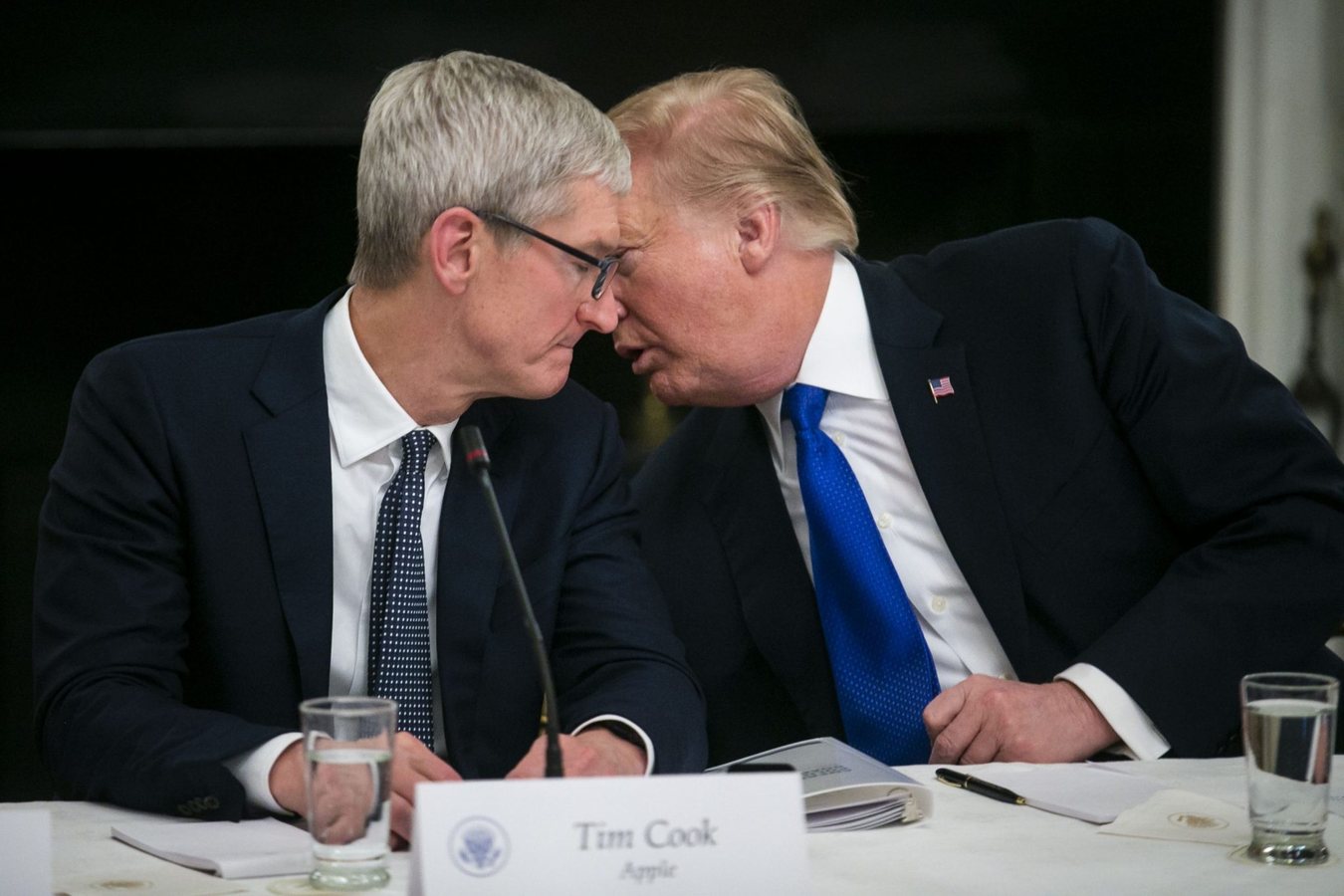
Tim Cook has stepped down as chief executive of Apple after 15 years in the role, handing the top job to longtime hardware chief John Ternus. He is not leaving the company, however, and will remain on as executive chair with an annual salary of $2 million, effective from September 26.
Apple announced in April that Cook would transition to the chairmanship while continuing to assist with certain aspects of the business, including engaging with policymakers around the world. His compensation package also includes an equity award with a target value of $45 million, according to a regulatory filing.
Cook's continued presence reflects the central role he has played in managing Apple's relationships with governments, particularly the administration of President Donald Trump. During his tenure, he earned a reputation as a so-called Trump whisperer for his ability to negotiate with the president on tariffs and trade policy, a skill that has become increasingly important as Apple's Asian supply chain places it at the centre of tensions between Washington and Beijing.
Cook took over as CEO shortly before the death of cofounder Steve Jobs in 2011. Under his leadership, Apple's market capitalisation grew from roughly $347 billion to $4.6 trillion, and the company became as focused on navigating government relations as on products and operations.
His relationship with Trump developed early. In 2019, Trump told reporters that Cook was the tech executive who called him directly, and that Cook had argued tariffs on Apple's China-made products could put the company at a disadvantage against South Korean rival Samsung. That relationship was tested again after Trump returned to the White House in 2025.
In February 2025, Apple announced it would spend $500 billion in the United States over four years, including plans to hire 20,000 workers. But Cook's access to the president did not always guarantee results. By May 2025, Trump was publicly criticising Apple as the company expanded iPhone production in India to reduce its reliance on China. Trump said he had told Cook he did not want Apple expanding production there and wanted more manufacturing in the US. Days later, he threatened Apple with a tariff of at least 25% on iPhones sold in the US but manufactured elsewhere.
Three months later, Cook was back in the Oval Office standing beside Trump, presenting the president with a customized Made in USA glass plaque mounted on a 24-karat gold stand. Last August, Apple announced an additional $100 billion commitment to US manufacturing, bringing its planned domestic spending to $600 billion over four years. The timing was significant, as Trump was preparing to impose a roughly 100% tariff on imported semiconductor chips but said companies building in the US would not have to pay the levy.
Cook's work extends beyond the White House. Apple remains heavily dependent on Asia for manufacturing even as it has shifted some production away from China, leaving the company exposed to the relationship between the world's two largest economies. Cook has spent years managing Apple's relationship with Beijing, and earlier this year he was among a group of US executives expected to accompany Trump on a trip to Beijing as the president prepared to meet Chinese President Xi Jinping.
Trump has offered his own account of the relationship. When Cook announced in April that he would step down as CEO, the president recalled receiving his first call from the Apple executive during his first administration. Trump wrote on Truth Social that it was the beginning of a long and very nice relationship, adding that Cook continued calling him over the years but never too much.
Cook has described his approach as focused on policy rather than politics. In March, he told ABC's Good Morning America: What I do is I interact on policy, not politics. I focus on policy.
62