Business 5 min read By Arthur Ellington
Reese Witherspoon Buys Back Hello Sunshine After $900m Sale
Reese Witherspoon and European studio Mediawan have acquired Candle Media's majority stake in Hello Sunshine, the media company she founded in 2016 and sold for roughly $900m in 2021. The deal returns control of the female-focused production business to its founder.
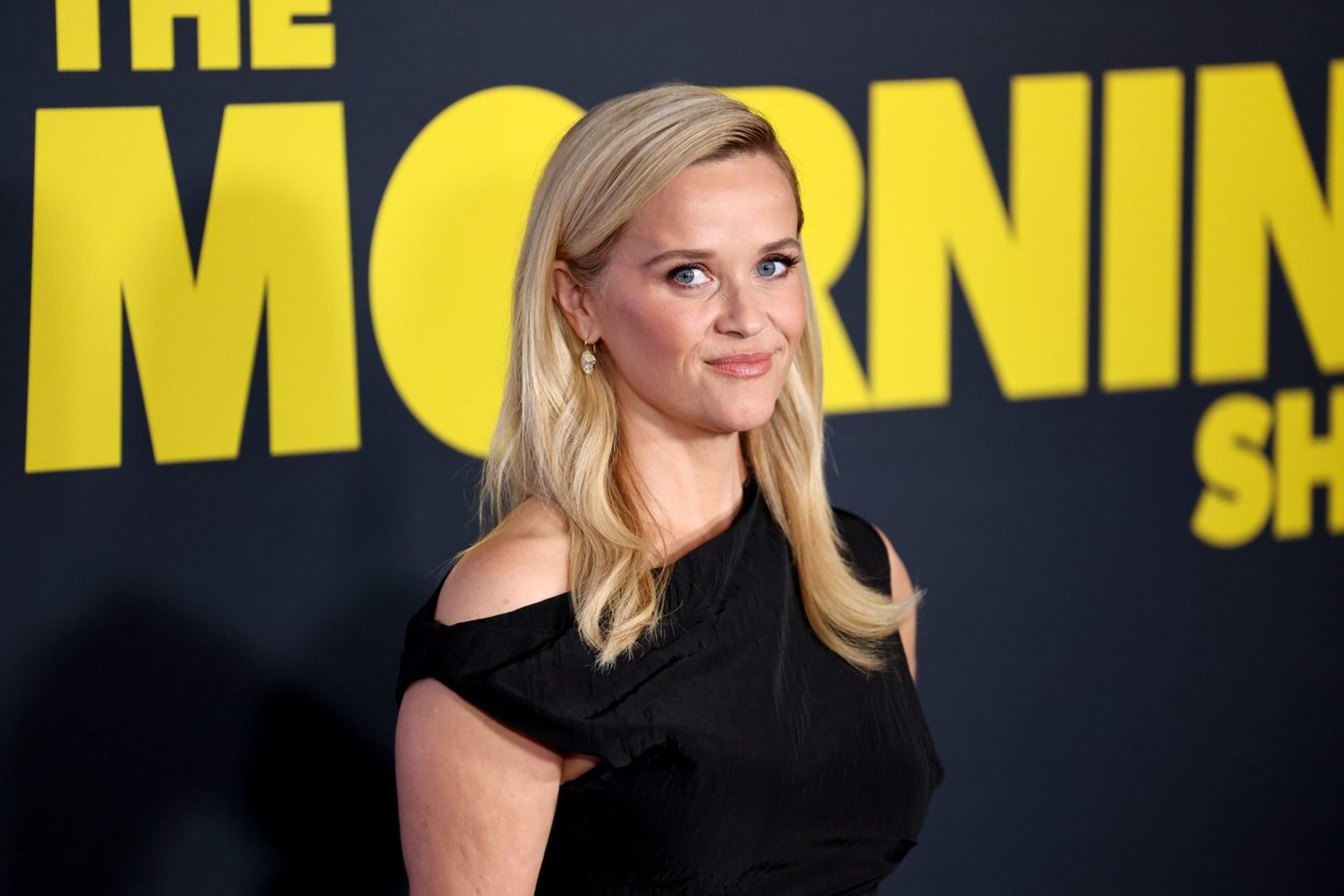
Reese Witherspoon has bought back control of Hello Sunshine, the media company she founded in 2016 to put women at the centre of film, television, podcasts and books. The actress and producer is acquiring Candle Media's majority stake alongside European studio Mediawan, the companies confirmed. Neither side disclosed terms, but the price is reported to fall in the low- to mid-eight figures — a fraction of the roughly $900m valuation placed on the business when Witherspoon sold a majority stake in 2021.
The deal marks a homecoming for Witherspoon, who will invest alongside Mediawan and retain a board seat. Cofounder Seth Rodsky will also join the board, alongside Witherspoon and Mediawan representatives. Hello Sunshine joins a Mediawan portfolio that already includes Chernin Entertainment and Plan B Entertainment. Witherspoon described the transaction as «a homecoming» in a statement, crediting Peter Chernin and Jesse Jacobs, whose Chernin Group backed Hello Sunshine at its launch. «The best is still ahead,» she added.
Hello Sunshine was born out of frustration. By the time Witherspoon was 34, she had spent two decades in Hollywood and was tired of scripts she found «abysmal» and «really demeaning». One project, built around a man with two women vying for his affection, pushed her over the edge. When she told her agent she would not audition, she was told every actress in Hollywood was fighting for those parts because there was nothing else. Witherspoon responded with what she called a «listening tour», visiting the heads of all seven major studios to ask how many films they were developing with a female lead. The answer, for the most part, was none. One executive said the studio had already made one film with a woman at its centre that year and could not make a second. «First I got mad, and then I was like, 'Wait — this is a huge white space,'» she recalled.
That realisation led to Hello Sunshine, cofounded with Strand Equity's Seth Rodsky as a partnership with AT&T's Otter Media. Its mission was to put women at the centre of every story. Hits followed quickly, including Big Little Lies, Little Fires Everywhere on Hulu and The Morning Show on Apple TV+, as well as the influential Reese's Book Club. In August 2021, Witherspoon sold a majority stake to a Blackstone-backed venture led by former Disney executives Kevin Mayer and Tom Staggs, valuing the company at roughly $900m. Witherspoon and CEO Sarah Harden retained significant equity and board seats.
Before Hello Sunshine, Witherspoon's first formal attempt to address Hollywood's woman problem came through Pacific Standard, the production company she ran with Australian producer Bruna Papandrea. Their first two book options — Cheryl Strayed's Wild and Gillian Flynn's Gone Girl — both hit No. 1 on the New York Times bestseller list, and the film adaptations racked up three Oscar nominations and more than $600m at the box office. Pacific Standard also coproduced HBO's Big Little Lies. But the economics did not work. «I was only working for producer fees. I had four employees, and I was only breaking even,» Witherspoon said. «The overhead was eating me alive. That's not a real business.»
Witherspoon's financial mindset was shaped early. She grew up in a household that hit «some pretty bad places» with money in her teenage years, thanks to her father's spending issues. At 16 or 17, she was pulled in to help. «I always had this idea that no one's coming to save me,» she said. «I didn't have a financial safety net.» That same mindset forced her out of Stanford after roughly a year when she could not afford the $33,000 annual tuition. Acting jobs paid, and years later, when she realised the reality of the studio system, she applied the same lesson: if she did not build the company, no one would build it for her.
For Witherspoon, the sale price is less important than the proof of concept. «I hope that people out here will think, 'I'm going to have the next Hello Sunshine,'» she said. «Because it is possible.»
10