Business 5 min read By Callum Montgomery
MSG Sports to split Knicks and Rangers into two listed companies
Madison Square Garden Sports is spinning off its New York Rangers business from the Knicks, creating two separately traded companies as the NBA champions begin their title defence.
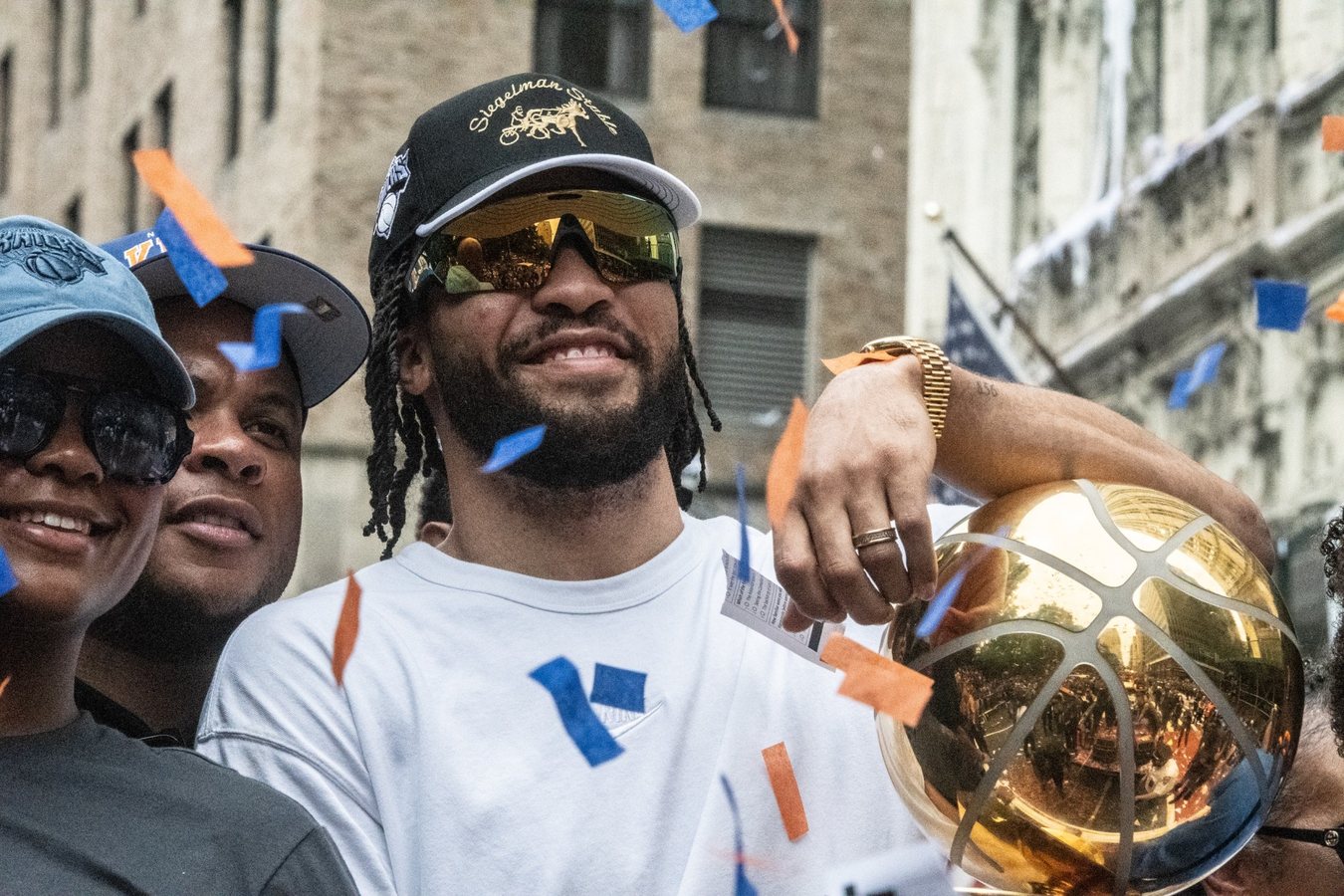
Madison Square Garden Sports is separating its New York Knicks basketball franchise from its New York Rangers ice hockey business, creating two independently traded companies in a move that will give investors a direct stake in each team.
The parent company will be renamed MSG Knickerbockers Corp., trading under the ticker MSGK, and will hold the defending NBA champions along with the G League's Westchester Knicks. The spun-off MSG Rangers Corp., trading as MSGR, will own the NHL Rangers, the American Hockey League's Hartford Wolf Pack and the MSG Training Center in Greenburgh, New York.
Under the intended tax-free distribution, shareholders of record at the close of trading on 20 October will receive one share of MSG Rangers for every two MSG Sports shares they hold. The distribution is scheduled for 26 October, subject to final league approval and other conditions, after which both companies will begin regular trading under their new tickers.
The split comes as the Knicks open their championship defence, having won their first NBA title in 53 years by beating the San Antonio Spurs in five games in June. Resale tickets for the opening game have averaged about $2,600 each, and the title run was worth at least $380 million to New York City. The Rangers, meanwhile, are chasing their own long wait for success, having not won the Stanley Cup since 1994.
MSG Sports has a market capitalisation of roughly $9.8 billion, a steep discount to independent estimates of the two teams' value. Sportico values the Knicks at $12.8 billion, nearly twice the NBA average, and the Rangers at $4.15 billion. Both rank second in their respective leagues, behind the Golden State Warriors and the Toronto Maple Leafs.
The structure could make it easier to sell either team separately in future, or simply give investors clearer visibility of what each business is worth. Supporters and investors can now take a stake in one or both franchises through pure-play sports stocks, or pass on the offer.
There are headwinds. Higher inflation could restrain revenue growth, regional cable fees are shrinking, and valuations look stretched after the parent company's shares gained more than 50 per cent this year. The stock hit all-time highs during the Knicks' title run and has stayed near those levels since the board approved the final terms of the split on 30 September.
Jay Ritter, a finance professor at the University of Florida and director of The IPO Initiative, said buyers invest in sports teams for financial return but also for perks such as proximity to celebrities and the bragging rights of bringing a championship to their hometown. He offered a measured outlook for individual investors. «I would expect that most publicly traded sports teams will be priced to offer investors a competitive financial return,» he said. «There is less chance of a complete failure compared to IPOs, but also less chance of huge upside potential than is true with other businesses, especially compared to the pharmaceutical business or tech.»
Ritter's data shows that, from 1980 to 2024, stocks spun out of parent companies performed better on average than IPOs over their first three years of trading. Spun-off stocks beat the total return of the Morningstar value-weighted market index by 6 per cent over that period, while the average IPO trailed the market by 4.6 per cent from its offer price, a gap of 10.6 percentage points. Much of the outperformance tends to come on the first day of independent trading.
One factor behind that record is size and stability: spin-offs tend to be established businesses, while IPOs are often younger growth companies with riskier profiles. In Ritter's study, 70 per cent of spin-offs had inflation-adjusted sales of $100 million or more, compared with 41.4 per cent of IPOs.
Franchise valuations have been climbing across the board, with record deals including the Khosla family's $9.612 billion purchase of the Seattle Seahawks, completed in September, and Bob Iger and Josh Kushner's August agreement to buy the Los Angeles Lakers for $12.5 billion, pending league approval. Private equity's entry into ownership groups has helped underpin record prices, and the Ross-Arctos Sports Franchise Index has risen sharply since the pandemic. Franchise values have compounded at 13 per cent a year for more than six decades as team ownership evolved from a vanity project into an asset class.
8