
Business 5 min read By Arthur Ellington
Middle East Energy Leaders Shift Investment Toward Natural Gas
Middle East energy leaders are increasing investments in natural gas, driven by regional instability and a strategic pivot from oil to gas resilience.
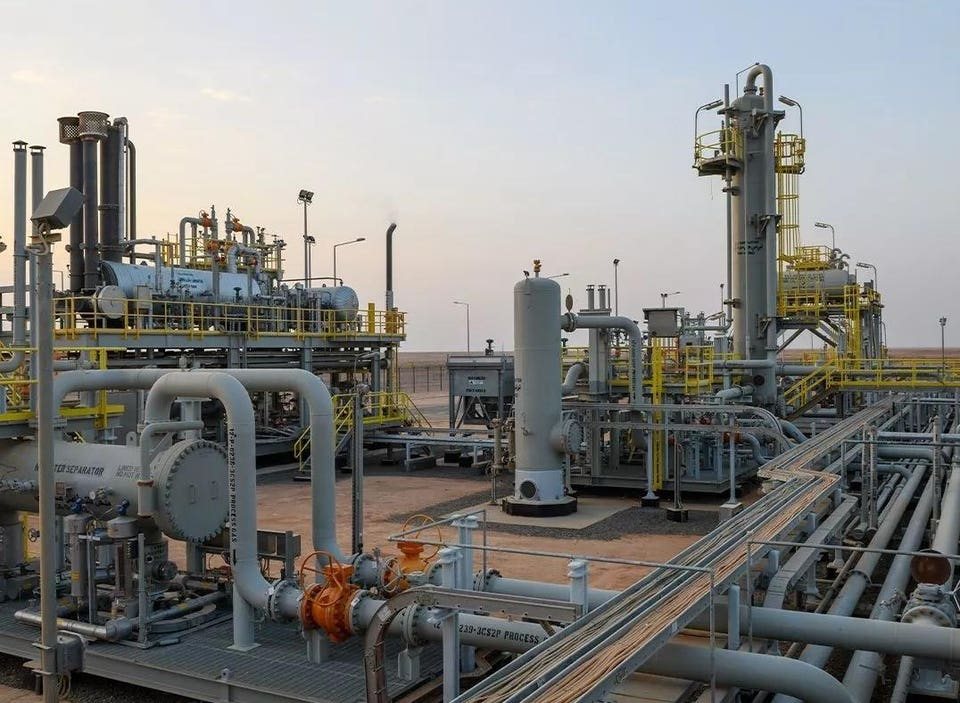
Energy leaders across the Middle East are redirecting their investment focus and petrodollars toward natural gas, a strategic shift that has gained momentum in recent years. The drive has been accelerated by the Iran War, which has underscored the need for energy resilience and supply security in the region.
The move reflects a broader recognition that natural gas offers a more flexible and lower-carbon alternative to oil, while still leveraging the region's vast hydrocarbon reserves. State-owned energy companies and national governments are now prioritising gas field development, liquefied natural gas (LNG) export capacity, and pipeline infrastructure as part of their long-term economic strategies.
This pivot is not merely a response to short-term geopolitical pressures. It aligns with global energy transition trends, where demand for natural gas is expected to remain robust even as renewable energy sources expand. For Middle Eastern producers, gas provides a bridge fuel that can support domestic power generation, industrial diversification, and export revenues for decades to come.
The Iran War has added urgency to these plans. Conflict in the region has disrupted traditional supply routes and heightened concerns about energy security among both producers and consumers. In response, Middle Eastern energy leaders are accelerating projects that enhance their ability to deliver gas reliably to international markets, particularly to Europe and Asia, where demand is growing.
Investment figures have risen sharply across the region. Major producers such as Saudi Arabia, the United Arab Emirates, and Qatar are expanding their gas production and export capabilities. Qatar, already the world's largest LNG exporter, is undertaking a massive expansion of its North Field project, which will increase its LNG output by more than 60% by the end of the decade. Saudi Arabia is investing heavily in unconventional gas reserves, including the Jafurah field, which is expected to become one of the world's largest shale gas developments. The UAE is also boosting its gas output and has announced plans to become self-sufficient in gas by 2030.
These investments are part of broader economic transformation agendas. By monetising natural gas resources, Middle Eastern governments aim to reduce their fiscal dependence on oil revenues, create jobs for growing young populations, and position themselves as key players in the global energy transition. Gas is also seen as a feedstock for petrochemicals, hydrogen production, and other value-added industries that can diversify their economies away from crude exports.
The shift toward gas also has geopolitical implications. As Europe seeks to reduce its reliance on Russian energy, Middle Eastern producers are emerging as alternative suppliers. Long-term supply agreements and infrastructure investments are forging new energy partnerships that could reshape global trade flows. For the Middle East, this represents an opportunity to cement its role as a reliable energy provider in an increasingly fragmented world.
However, the transition is not without challenges. Financing large-scale gas projects requires significant capital, and competition from other global suppliers, including the United States and Australia, remains intense. Additionally, environmental concerns about methane emissions and the long-term viability of fossil fuels could affect investor appetite in the future. Nevertheless, for now, Middle Eastern energy leaders are betting that natural gas will remain a cornerstone of the global energy system for decades.
The strategic pivot to gas is a defining feature of the region's energy policy in the 2020s. It reflects a pragmatic approach to energy security, economic diversification, and climate goals, all while navigating a volatile geopolitical landscape. As the Iran War continues to shape regional dynamics, the emphasis on gas resilience is likely to intensify, with significant implications for global energy markets and the economies of the Middle East.
58