Business 4 min read By Bethany Hadley
Fed chair points to AI token prices as a gauge of productivity gains
Federal Reserve Chairman Kevin Warsh has highlighted AI token prices as a window into whether artificial intelligence is delivering genuine productivity gains or becoming a commoditised market that consumes capital without strong returns.
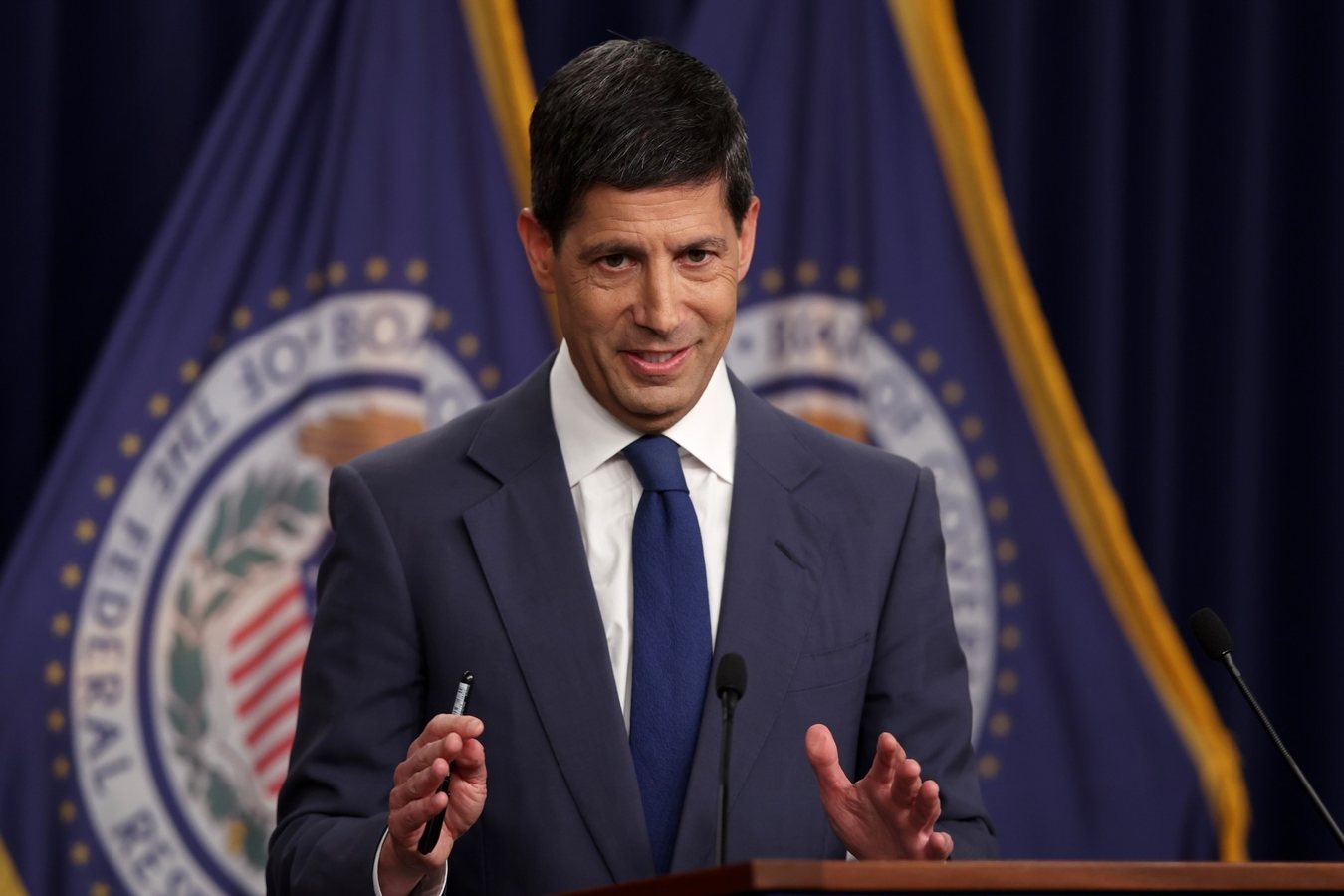
Federal Reserve Chairman Kevin Warsh has drawn attention to an unusual economic signal that could help businesses judge whether artificial intelligence is delivering the productivity gains they are betting on: the price of AI tokens.
Speaking at the Jackson Hole symposium on Friday, Warsh focused his remarks primarily on inflation, but he also pointed to token prices as a metric worth watching. Tokens are the units used to measure the data that AI models process, and many AI companies charge customers based on token consumption. Warsh described AI as a potential «new factor of production», then raised a pointed question: will customers pay a premium for tokens from the most advanced models even as prices for older models fall toward marginal cost?
Warsh’s comments do not mean token prices are becoming a formal Fed indicator. Instead, they suggest the central bank sees them as a useful lens on how the economics of AI are evolving. Gregory Daco, chief economist at EY Parthenon, said Warsh appears to view token prices as a window into the AI market, offering clues about competition among providers, differences in model quality, pricing strategies, and computing costs.
Interpreting those price signals, however, is not straightforward. Falling token prices can tell two very different stories. If AI models become more capable while getting cheaper, businesses could generate more output for every dollar they spend, a sign of genuine productivity gains. But if models become increasingly interchangeable, providers could be forced to compete on price. That could signal commoditization and raise questions about whether the enormous capital flowing into AI will generate strong returns.
«Pricing power at the frontier, not usage growth, is becoming the real scoreboard for whether AI is creating value or just consuming capital,» said Luke Lango, a technology analyst and publisher of Innovation Investor.
Token use has already become a top-of-mind cost concern for chief financial officers. For companies spending on AI, token prices are an input cost. But lower cost does not necessarily mean higher returns. «For CFOs, the more relevant question is whether AI adoption is generating measurable productivity gains, improving margins, or creating new revenue opportunities,» Daco said.
The larger issue behind Warsh’s comments is that the economics of AI will ultimately hinge on how much value it creates and who captures it. If frontier model providers retain pricing power, the returns on AI investment could be substantial. If the market commoditizes, the capital pouring into the sector may not deliver the returns investors expect.
For finance leaders, the practical takeaway is to watch not just how much their organisations spend on AI, but what that spending produces. Token prices offer a market-based signal of whether the technology is becoming a source of competitive advantage or a standardised utility. As Warsh’s remarks suggest, the distinction matters not only for individual businesses but for the broader economy.
56